Showing posts with label Candide. Show all posts

Wednesday, October 14, 2015

Life is an expedition

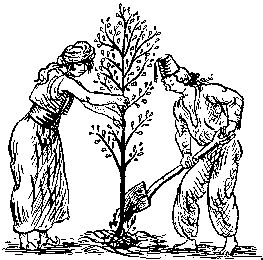
Candide written by Voltaire mainly talked about the expedition of Candide, a man raised in optimism but gradually recognize the real essence of the world through all the miseries and blessings, and finally Voltaire draw the conclusion of “we must cultivate our garden”.
The novel was full of fantasy, and as a western tradition, it described South America in a visionary tone. The description of “El Dorado” reminded me of “Ali Baba and the Forty Thieves” and “Aladdin”. The illusion of treasury in a faraway kingdom is a traditional topic of western stories. 
treasury in the story of Alibaba

The novel contained much philosophical thoughts and criticized Lebnizian optimism, but it did all of this thorough the means of storytelling, and obviously the story was not convincing. However, expedition novels had always been popular from “Around the World in Eighty Days” written by Jules Verne to “The Alchemist” written by Paulo Coelho, and even the movie “life of Pi” in 2012 continued this theme. The story of Candide is not the most bizarre one, but it’s so influential and really took a place in French literature.
Around the World in Eighty Days also contained a worldwide expedition

Though the development of science is quite complete and we all get scientific education, we are still in favor of fantasy, because there are metaphors in the stories. We get resonance of Candide, not because we suffered same thing, but because we all suffered from miseries and got blessings. Though they got exaggerated in the novel, but the feeling was same, and the conclusion of cultivating the garden, which is a metaphor of one’s heart is universal.
Everybody could view his own life as an expedition, and we get educated through these expedition novels which wrote about others’ lives.

Wednesday, September 30, 2015

     
        Life Lessons From Our Endearingly Idiotic Friend, Candide


As I’m sure many of us are pleased to find as we read Candide, it makes a lot more sense than it did in high school. At the time, I couldn’t, for the life of me, understand why my tenth grade English teacher seemed so eager for us to love this ridiculous adventure story. But in re-reading it, I realized I was giggling to myself like an idiot in the middle of the library, and thus there had to be some value in it. 
Through the rediscovery of Voltaire’s chef d’oeuvre we call Candide, I have found some valuable life lessons I hope to bring with me into my infinitely less exciting life’s adventure. 
In no specific order of importance: 

Your teacher’s philosophy shouldn’t necessarily be your own. Throughout this saga, it becomes evident that Candide’s absolute faith in Pangloss’s teachings were the source of his ridiculous naïveté. This idea that he lives in “the best of all possible worlds” and that “things cannot be other than they are”, leads Candide to accept and not question countless horrors over the course of his journey that he certainly should not have permitted. Therefore, I think it is important to take into consideration and mull over all that interesting information your teacher’s give you, but also to question it and formulate your own opinions on the matter. 
Things Change. Opinions should evolve with time. Pangloss’s undying optimism even in the face of the worst situations cannot, and should not be realistic. All the crazy happenings of life should subject one’s opinions to change and evolve over time. Having a set mindset will get you nowhere.“‘Well, my dear Pangloss,’ said Candide to him, ‘When You were hanged, dissected, whipped, and tugging at the oar, did you continue to think that everything in this world happens for the best?’ ‘I have always abided by my first opinion,’ answered Pangloss; ‘for, after all, I am a philosopher, and it would not become me to retract my sentiments; especially as Leibnitz could not be in the wrong: and that preestablished harmony is the finest thing in the world, as well as a plenum and the materia subtilis.’” (Chapter 28). 

Don’t let flattery get in the way  of reason. Just because two random guys call you a hero, it doesn’t mean you should blindly trust their Bulgarian king. This stupidity may lead you to a dungeon where you will subsequently get whipped 4,000 times. (Chapter 2)

Money Can’t Buy Happiness. It is when Candide comes across his fortune in Eldorado and appears to be somewhat financially stable for the time being that he seems to be the most unhappy. He becomes terribly aware of the negative aspects of humanity, and his unshaken optimism is truly put to the test. Furthermore, the Beatles had it right with “Can’t Buy Me Love”.


True fulfillment is achieved through hard work, plain and simple.  It isn’t until the very end of Candide that we see Voltaire’s view of true happiness. As Candide settles into a simple life and builds his garden, working on something he can control and get fulfillment out of, we are taught that sometimes it is more fulfilling to make things happen in your life instead of letting the supposed “best of all possible worlds” take it’s course. Cultivate your life the way you want it to exist, with a realistic and achievable perception of its course. Blind optimism will lead you astray, on a crazy adventure you don’t necessarily want, only to realize that once you recognize reality, you’ll understand what is really important.